



Being a homeowner is everything I dreamed of.
Sure, I still have that “new homeowner” glow and have an unhealthy obsession with interior design shows. But it’s perfect for our family, and the potential of each room keeps me inspired. After all, it’s our home.
Maintaining your nonprofit’s website is a lot like taking care of your own home.
Whether you’re building your dream website from scratch or planning to gut the place, there are certainly different challenges and opportunities to consider for each path. But there are also some basic foundations for every home to be structurally sound and feel like home.
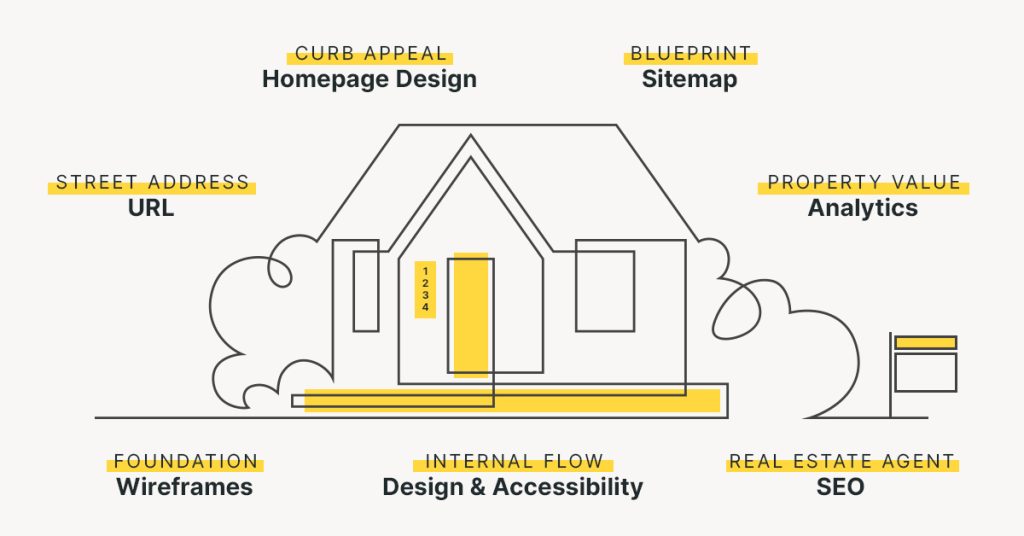
Here are 7 essentials to make your “virtual home” a success:
- Street Address: Your URL
Where your nonprofit lives online is a big deal. Instead of location, location, location, instead, your website domain should be easy to spell, easy to say, easy to find. The shorter the better, but try to avoid acronyms because they can easily be mixed up or misinterpreted. - Blueprint: Sitemap
Before renovating your home, you must know what’s behind the walls. Taking inventory of your current website is a great starting point, but then we must translate that overview into a clear path for the end user. Where are the natural paths (links), how big is each room (webpage), and what digital skeletons are in the attic (dead ends or outdated pages)? - Foundations: Wireframes
After your blueprints are laid out, we can start planning the design of each webpage. What content is most important? Do pages just need a fresh coat of paint or new blocks to make them more functional? - Curb Appeal: Homepage Design
Users are driving by your digital home everyday and “bouncing” either because your nonprofit isn’t a good fit or doesn’t look like a place they’d like to stay. People make a first impression of your website in half a second, and most of our impression is based on design. Does your website look credible and attractive? - Internal Flow: Design & Accessibility
Everyone wants to feel cozy in their own home, but it’s another level of care to make sure everyone feels welcome inside. Your website’s design should be both beautiful and functional, making it easy to navigate and conveying your nonprofit’s mission and expertise. Additionally, ensuring accessibility with screen-legible fonts, high contrast, and alt text for images is essential for welcoming all visitors. - Property Value: Analytics
Analytics tells us how our website measures up to other organizations “in the neighborhood” and, ultimately, what your digital home is worth. It’s worth keeping a pulse on what’s appealing or shifting in the market. - Real estate agent: Search Engine Optimization (SEO)
Just like a good real estate agent knows how to market a property, SEO helps your website get noticed by the right people. It’s about understanding what potential visitors are looking for (keywords), showcasing your website’s best features (content optimization), and ensuring your digital front door is easy to find (technical SEO). A skilled SEO expert can help your nonprofit’s website stand out in a crowded digital neighborhood and attract more visitors.
I could keep going with this analogy, but you get it
As obsessed as we can be with renovations and redesigns, the best way to care for your website is in small doses of maintenance over time. It can feel overwhelming or never-ending if you wait to tackle all of these changes at once.
And the truth is, most people don’t try to build a home on their own. There are experts for each of these touchpoints!
Here are some related articles you might find helpful:
- Branding for Nonprofits
 – Establish a strong brand identity for your nonprofit.
 - Nonprofit Branding Essentials – Key elements of nonprofit branding.
- Nonprofit Design Tips – Practical design tips tailored for nonprofits.
- Brand Positioning Statement – Craft a compelling brand positioning statement for your nonprofit.
Related Resources
For more insights on content marketing and SEO strategy, explore these articles:

Consistency over professionalism: Nonprofit design tips
Forget traditional “professional” looks! Learn how structured and unstructured elements can enhance your brand’s appeal and authenticity.Read More

Needs, Not Wants: 9 Must-Haves for Nonprofit Branding
Understanding the ins and outs of branding can be overwhelming and it can be even more difficult to know which…Read More

Does branding really matter for nonprofits?
The line is starting to blur between social impact and nonprofit sectors. People are supporting businesses that give back to…Read More

The 5-Minute Positioning Statement
Having a clear and compelling mission statement lays the foundation for your brand, but it can be really difficult to…Read More





Comments +